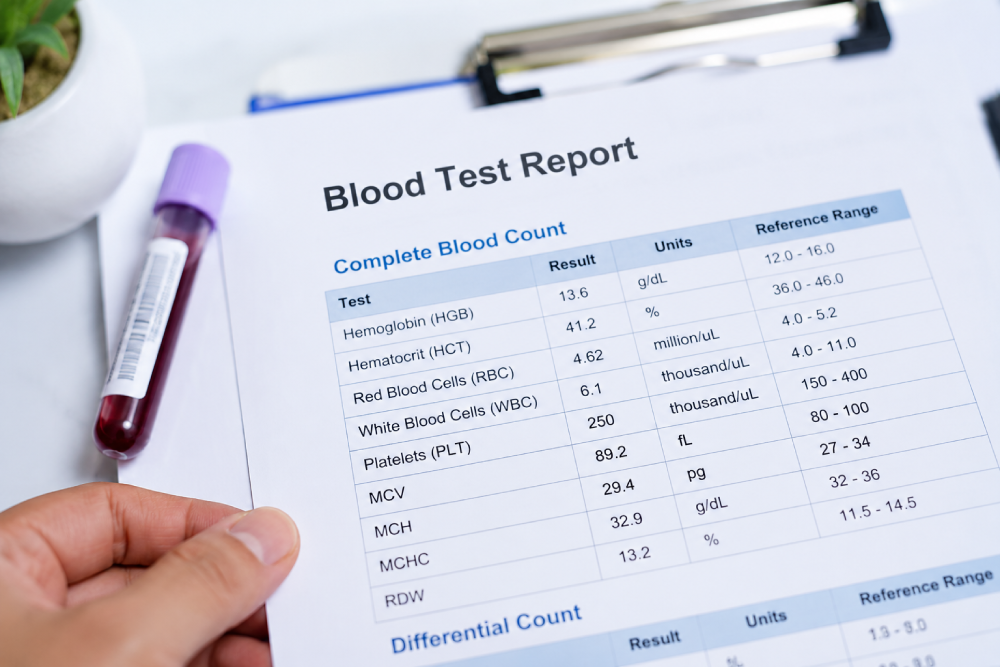
Getting a blood test can sometimes feel overwhelming. Your report may contain numbers, abbreviations, reference ranges, and medical terms that are difficult to understand at first glance. The good news is that you do not need to memorize every term to understand what your results generally mean.
Here is a simple guide to help you read the most common parts of a blood test report.
What Is a Blood Test?
A blood test analyzes a sample of your blood to provide information about your overall health. Depending on the type of test, it can help healthcare professionals look at blood cells, organ function, blood sugar, cholesterol, hormones, nutrients, and other important markers.
Blood tests may be part of a routine health checkup or may be recommended when you have specific symptoms or health concerns.
Understanding a Complete Blood Count
One of the most common blood tests is a Complete Blood Count (CBC). It measures different types of blood cells and provides information about how your blood is functioning.
Common CBC measurements include:
- Hemoglobin (HGB): Hemoglobin is a protein in red blood cells that carries oxygen throughout the body.
- Hematocrit (HCT): This represents the percentage of your blood made up of red blood cells.
- Red Blood Cells (RBC): These cells transport oxygen from your lungs to the rest of your body.
- White Blood Cells (WBC): White blood cells play an important role in your immune system and help your body respond to infections and other conditions.
- Platelets (PLT): Platelets help your blood clot when you have an injury.
- MCV: Mean Corpuscular Volume indicates the average size of your red blood cells.
What Does the Reference Range Mean?
You will usually see a reference range next to each result. This range represents values commonly observed in a particular population and can vary depending on the laboratory, testing method, age, and other factors.
A result slightly outside the reference range does not automatically mean something is wrong. Similarly, a result within the range does not always rule out a health concern.
Your healthcare professional considers your results alongside your symptoms, medical history, medications, and other tests.
Why Can Blood Test Results Change?
Blood test results can vary for many reasons. These may include:
- Diet and hydration
- Exercise
- Age
- Medications or supplements
- Recent illness or infection
- Time of day
- Fasting or eating before the test
- Certain medical conditions
This is why it is usually better to look at your results as part of the bigger picture rather than focusing on one number.
Should You Be Concerned About an Abnormal Result?
Seeing a result marked “high” or “low” can understandably cause concern. However, an abnormal result does not necessarily indicate a disease.
Some results can temporarily change because of factors such as dehydration, recent physical activity, or an illness. Your healthcare professional can determine whether a result requires further evaluation.
Do not diagnose yourself based on a single blood test value. If you have questions about your results, discuss them with your doctor or healthcare provider.
When Should You Get Your Blood Work Done?
Routine blood testing may be recommended as part of preventive healthcare, while other tests may be ordered to investigate specific symptoms or monitor an existing condition.
Following your healthcare provider’s instructions about preparation, such as fasting when required, can help ensure your test is performed correctly.
Make Your Health Information Easier to Understand
Your blood test report is more than a collection of numbers. It provides useful information that can help healthcare professionals understand what is happening inside your body.
If you receive a report that you do not understand, take the time to discuss it with a qualified healthcare professional rather than trying to interpret the results on your own.
At QwiCare, we believe healthcare should be easier to understand and easier to access. From quality pathology services to convenient home healthcare, our goal is to help make essential care fit more naturally into your schedule.
Disclaimer: This article is for general educational purposes only and should not replace professional medical advice, diagnosis, or treatment.